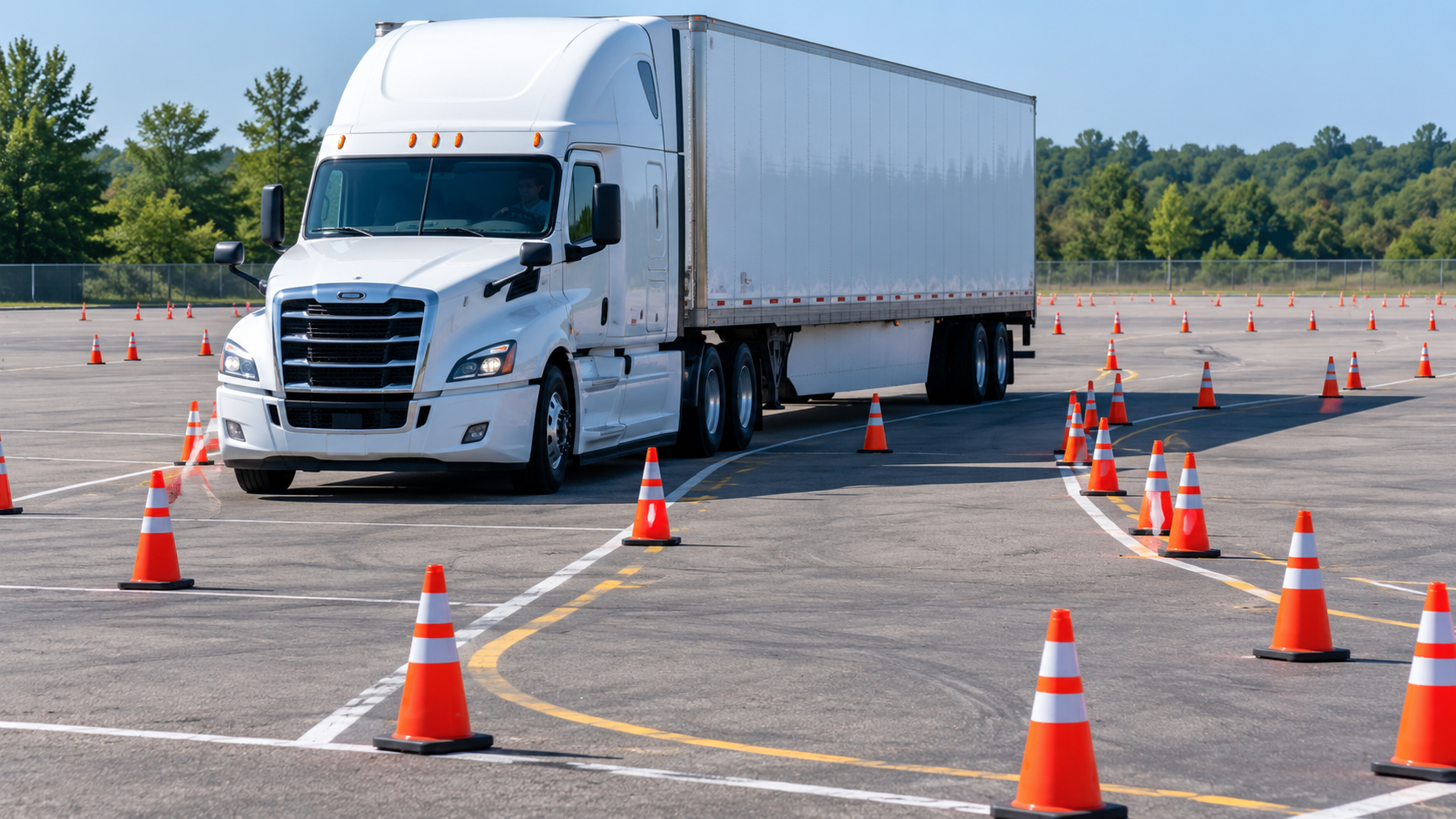
Earlier this year, questions about the quality of commercial driver training surfaced here in Texas after federal officials began examining hundreds of trucking schools and removing thousands of training providers from a federal registry.
Now, the issue has expanded.
The U.S. Department of Transportation recently announced action against 110 commercial driver training schools after drivers they had trained were later found to lack the English-language proficiency required under federal regulations. Federal officials also said they had issued notices of proposed removal to more than 160 additional training providers after investigations uncovered problems including unlicensed instructors, inadequate space for required driving maneuvers, and missing training records.
The announcement has received attention in part because of the debate surrounding immigration and English-language requirements for commercial drivers. But a broader safety issue shouldn't get lost in that discussion.
The people and institutions responsible for training new commercial drivers are an important part of the system that determines whether someone is prepared to operate a tractor-trailer or other large commercial vehicle safely. When that system doesn't work as intended, the consequences can extend well beyond the trucking industry.
Federal Investigators Are Looking Beyond English Proficiency
Federal regulations require commercial drivers to have sufficient English proficiency to communicate with the public and law enforcement and understand highway signs and signals. The recent enforcement action focused heavily on schools that federal officials say trained drivers who later failed to demonstrate that proficiency during roadside inspections.
But the government's concerns with commercial driver training go considerably further.
According to reporting by The New York Times, federal investigators examined 400 driver training schools and found that 40 percent didn’t meet applicable rules and requirements. Transportation officials described schools using unqualified instructors, operating without adequate classroom or driving space, and failing to provide students with sufficient practical driving experience.
Those findings follow an earlier investigation into trucking schools in Texas that raised similar questions about whether schools listed as commercial driver training providers were actually providing the instruction and experience new drivers need.
Taken together, the investigations raise questions about how well the system prepares new commercial drivers.
What Training Is Required Before Someone Can Get a CDL?
Since February 2022, federal Entry-Level Driver Training requirements have established minimum training standards for many people seeking their first Class A or Class B commercial driver's license.
Before eligible applicants can take a CDL skills test, they generally must complete required training through a provider listed on the Federal Motor Carrier Safety Administration's (FMCSA's) Training Provider Registry. Requirements include both classroom (theory) instruction and behind-the-wheel training.
Training providers must meet requirements involving their curriculum, instructors, facilities, vehicles, recordkeeping, and compliance with applicable state laws. Providers self-certify that they meet those requirements when registering with FMCSA.
That last point is significant. Being listed in the federal registry doesn’t mean FMCSA has independently inspected and certified every school before it begins training drivers. Instead, providers attest that they meet the applicable requirements and can be removed from the registry if an audit or investigation later determines that they do not. That makes meaningful oversight especially important.
Why Proper Training Matters for Commercial Truck Drivers
Learning to operate a tractor-trailer involves much more than moving a truck from one place to another. Commercial drivers must learn how to control vehicles that are much larger and heavier than passenger cars, require more room to stop and maneuver, and have substantial blind spots. Drivers also encounter complicated situations involving merging traffic, construction zones, changing weather, steep grades, pedestrians, and other motorists who may not understand how a large truck responds.
Training can’t eliminate every crash. Even experienced, properly trained truck drivers can make mistakes, and trucking accidents can occur for reasons unrelated to a driver's education. But minimum training standards exist for a reason. A new driver shouldn’t enter the industry without receiving the instruction and practical experience required to safely operate the type of commercial vehicle that driver will be expected to handle.
When a school cuts corners on behind-the-wheel instruction, uses instructors who don't meet federal qualifications, or certifies training that was not properly completed, it can undermine one of the safeguards designed to keep unprepared drivers off the road.
What Else Can Contribute to a Serious Truck Accident?
Recent investigations shouldn’t suggest that trucking schools alone determine whether commercial vehicles are operated safely. Motor carriers also have ongoing obligations involving the drivers and vehicles they put on the road. Federal safety regulations cover driver qualifications, hours of service, vehicle inspection, maintenance, and repair. Drivers themselves are responsible for following traffic laws and operating their vehicles safely.
That means a serious truck accident may raise questions that extend well beyond what happened in the seconds before the crash.
Was the driver properly qualified? What training did the driver receive? Did the trucking company adequately supervise the driver? Were there previous safety violations? Was the vehicle properly maintained? Did company policies or scheduling practices contribute to unsafe driving?
Those questions can matter when determining why a crash occurred and who may ultimately bear responsibility for the injuries it caused.
What the Trucking School Closures Mean for Roadway Safety
There is room for disagreement over how federal trucking regulations should be enforced and what role individual states should play. Still, the basic safety goal behind commercial driver training requirements is much less complicated. People entrusted with operating large commercial vehicles should be properly trained and qualified.
The recent trucking school closures are another reminder that issuing a CDL should mark the end of a training and testing process, not simply an administrative hurdle. When regulators discover schools that may not be meeting those standards, it’s reasonable to ask not only how those drivers were certified, but whether weaknesses in the system could be putting other people on the road at risk.
For those of us who represent people seriously injured in commercial truck crashes, the issue is not where a driver came from or what political debate surrounds a particular enforcement action. After a crash, the important question is whether the driver and trucking company followed the safety rules meant to protect everyone sharing the road.
If you or a family member has been seriously injured in a commercial truck accident in Texas, contact The Cochran Firm Texas or call 1-800-843-3476 to discuss what happened and learn more about your legal options.