

Over the past two years, search engines and AI systems have significantly changed the way people look for and access legal information. It’s also impacted how a potential client finds, and chooses a lawyer when they need help.
But it’s not just search systems that have changed; your audience has, too.
The audience expects a law firm’s website, blog posts, and articles on third-party platforms to meet their needs. Whether that’s an answer to a question, solution or guidance for what to do next, update on a case or new legislation, or something that affects them, their job, or community, they have certain expectations. They want it quickly and they need to understand what’s found.
When this doesn’t happen or what they’re looking for is buried behind sales pitches or legal jargon, your law firm’s brand takes a hit. You may have even completely lost your shot with them.
People remember bad experiences and who caused them, even those that happen online.
Making sure this initial interaction with your law firm is a positive is crucial. But it requires a solid legal content marketing strategy, and one of the first steps should be a content audit.
What Is a Content Audit?
There are numerous variations of content audits, and the overall focus depends on the individual business and their goals. However, in general, it’s an assessment of how content is performing and if it’s optimized for SEO, and where and why it’s succeeding and/ or failing.
For lawyers, understanding what your audience needs and resonates with them is key to improving the impact of content at every stage – from growing brand awareness and trust to engagement and decision making.
A content audit shows not only what’s doing well, but how to maintain momentum and even expand on and leverage content for greater success. It identifies the possible causes of pages and posts that are falling short, like broken links and complex, unclear, or salesy language.
From there, an audit guides how to fix issues and what strategies should be used moving forward. For example, if your most important pages aren’t positioned for the realities of today’s search landscape, explaining how lawyers should structure content for AI citation and discovery would be included in our report.
Components of a Content Audit for Lawyers
At The Legal Examiner, website content audits for law firms typically involve assessing specific components:
· Google Analytics data
· Readability scores on key pages and posts
· Internal pathways and navigation
· Content relevance, structure, and optimization
· Page structure
· Technical performance*
*A technical performance audit is typically included in our content audit. We’ll be explaining what this is in a future post.
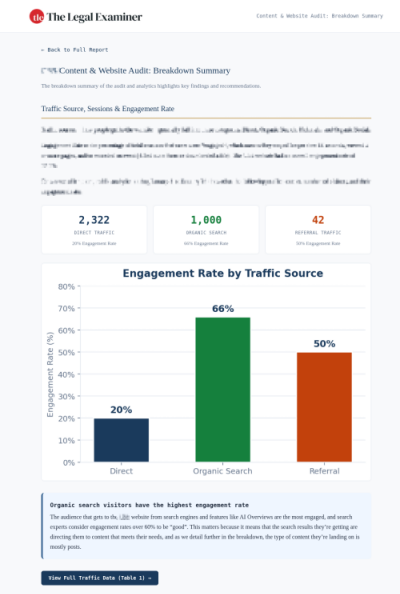
Analyzing top landing pages, traffic sources, engagement rate, and pages and blog posts with the most views tells us several things – how visitors are getting to the site, where they’re coming from, what content they’re sticking around to read, and how well pages are performing.
Readability scores, internal pathways, messaging, language, and topic relevance are other valuable components of a content audit. They show how well content is targeted to the audience, if it’s relevant to what they’re seeking, and whether visitors navigate to other pages on the site.
When we know what pages and posts are performing well and resonating with the audience, we can identify blog topics for lawyers to focus on, pages that need revisions or updates, and new pages that should be added. But is also tells us what pages or posts aren’t getting traction and why.
Why Your Firm’s Website Needs a Content Audit
We live in a digital-first world. Technology has changed the way we live, communicate, spend our downtime, and work. And it’s changed how we make decisions.
Your law firm’s audience turns to the internet first. They research lawyers and firms before they make that phone call, fill out a contact form or book a consultation. Even referrals look you up before reaching out. This is why your law firm needs a website content audit.
Potential clients need to see your expertise though an active online presence and quality, value-driven content. But your target audience is more demanding, judgmental even, than ever. People expect to get answers quickly, without the sales pitch and in a language they understand. When they don’t find what they need from you, they move on and end up on the doorstep of a competitor.
Lawyers cannot say they’re the best or that they’re an expert; they must demonstrate it with high online visibility and engaging content. If you don’t know how your content is performing or whether your website and blog posts are resonating with your audience, it’s time you learned.
If it seems impossible or futile to try to carve out space in a crowded digital landscape, you’d be surprised by what a content audit can tell you. The clear, actionable strategies that come from this type of assessment are effective because it’s all about your audience and optimizing what you publish for search engines and AI.
Contact us to learn more about what a content audit can do for your law firm.


