Louisiana State Police investigated 430 crashes involving parked commercial motor vehicles between 2023 and 2025. More than half resulted in injuries, and 18 people were killed.
The numbers highlight the danger posed when tractor-trailers are parked along high-speed roadways, particularly at night. While commercial trucks sometimes must pull over because of a breakdown or other urgent situation, non-emergency roadside parking can pose a potentially deadly obstacle for motorists traveling at interstate speeds.
The issue has received increased attention as Louisiana studies ways to expand safe truck parking. But regardless of whether more parking becomes available, keeping tractor-trailers from unnecessarily stopping along interstate shoulders and other roadside areas remains an important highway-safety concern.
Why Are Parked Tractor-Trailers Dangerous on Interstates?
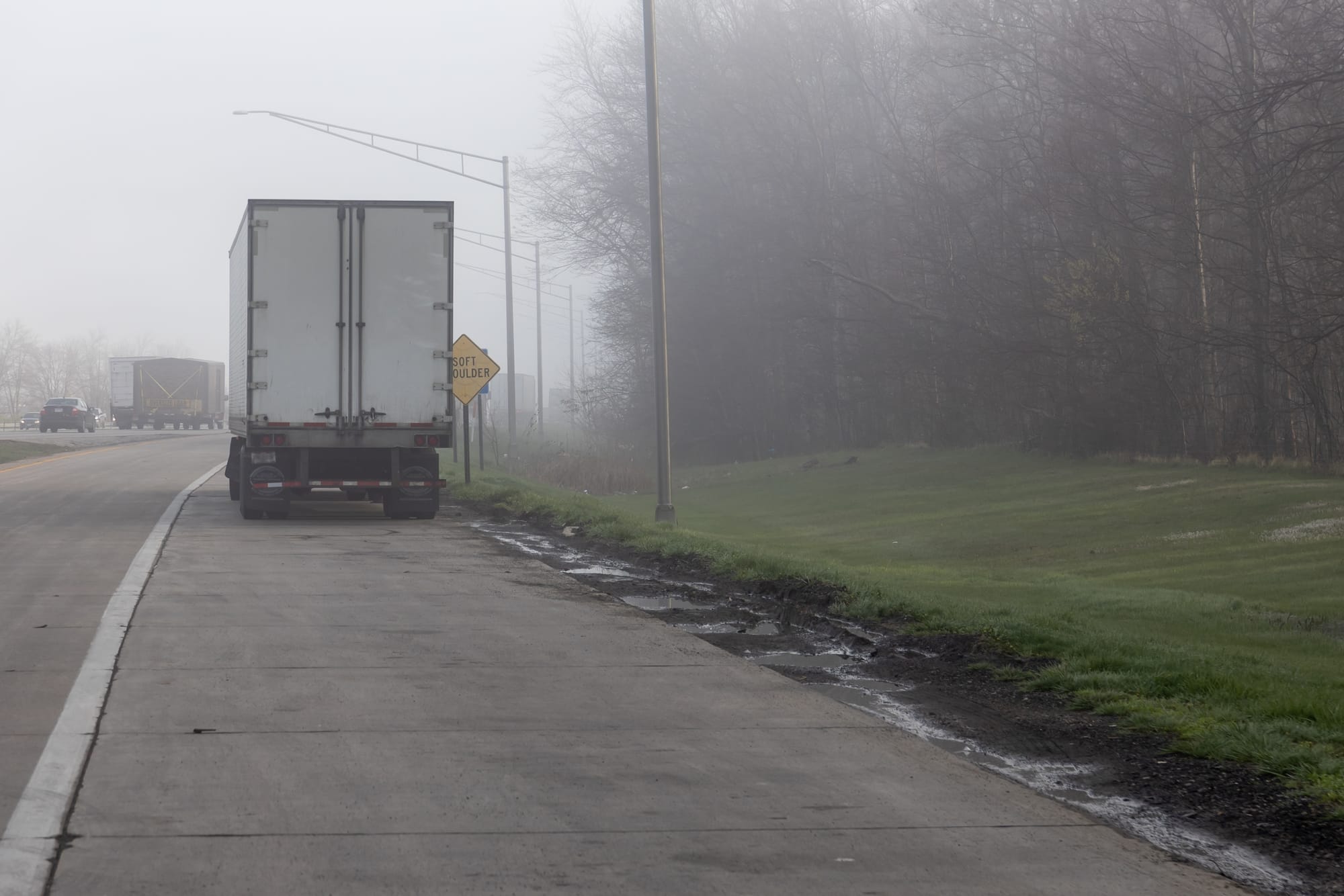
Professional truck drivers are trained to recognize the dangers of stopping along high-speed roadways. A tractor-trailer parked on an interstate shoulder can become an unexpected fixed obstacle for approaching motorists, and the danger can be especially difficult to recognize after dark.
These crashes don’t necessarily begin with a motorist driving directly toward a parked truck. Vehicles leave travel lanes for many reasons. A tire can fail. A mechanical problem can cause a driver to lose control. Heavy rain can lead to hydroplaning. A motorist may have to make a sudden evasive maneuver to avoid another vehicle or roadway hazard.
Highways are designed with areas beyond the travel lanes that provide motorists with opportunities to slow down, regain control, or safely stop when something goes wrong. A tractor-trailer parked in that recovery area can eliminate that opportunity.
An incident that might otherwise end with a disabled vehicle on the side of the highway can instead become a high-speed collision with a stationary commercial truck.
When Can Commercial Trucks Park on Louisiana Interstate Shoulders?
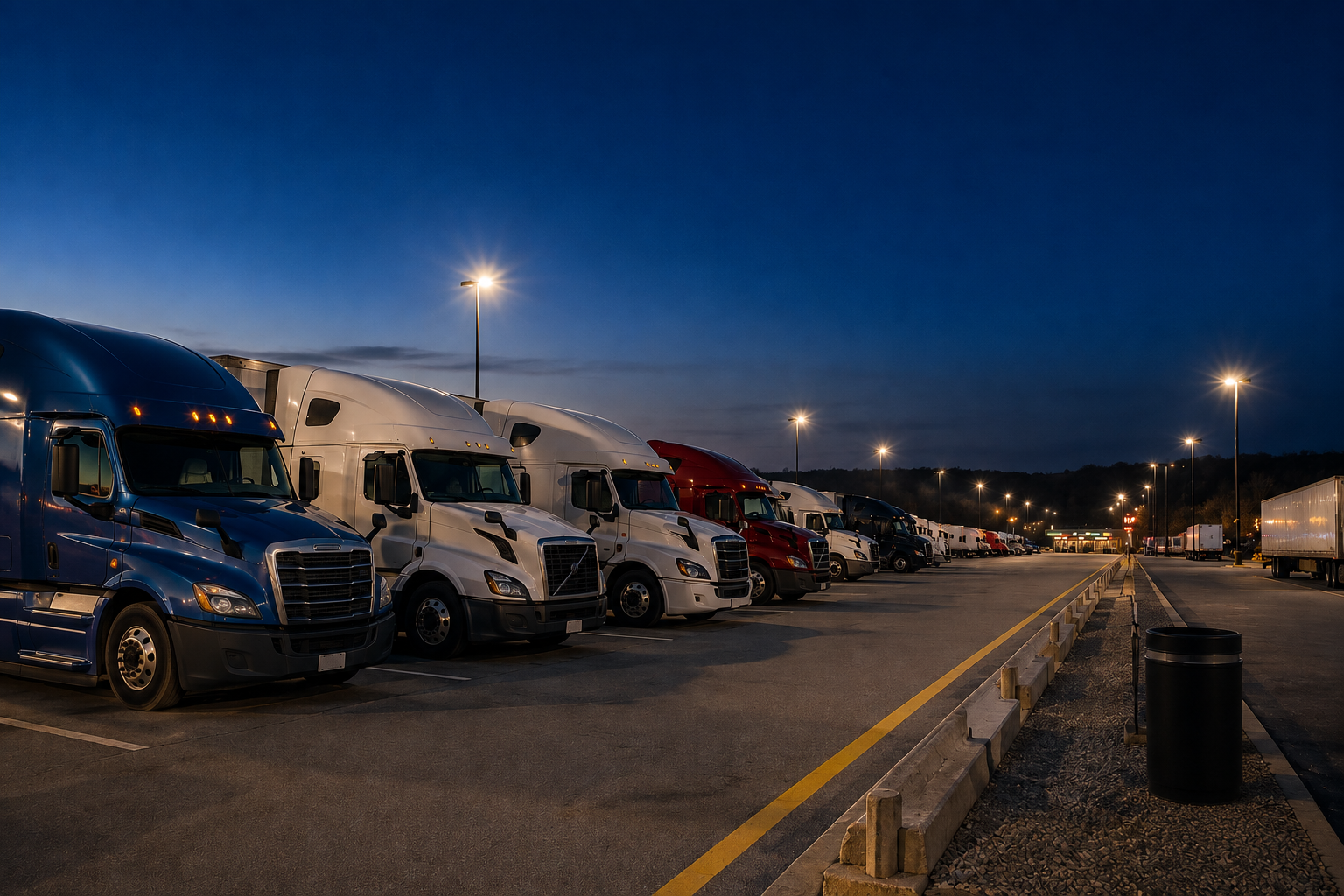
Interstate shoulders are primarily intended for emergencies, not routine rest breaks or overnight truck parking. Louisiana prohibits stopping or parking on interstate shoulders except in an emergency. Commercial drivers who need to stop for rest are expected to use truck stops, travel centers, designated rest areas, or other lawful parking locations when available.
A disabled truck or another urgent situation may leave a commercial driver with no safe alternative but to pull onto the shoulder. Stopping along an interstate simply to sleep or rest is different.
Louisiana's recent enforcement numbers suggest the problem is significant. State Police documented nearly 1,500 violations involving commercial trucks illegally parked on interstate shoulders and access ramps during 2025, according to information released by the Louisiana Department of Transportation and Development.
What Is a Sitting Duck Truck Accident?
Crashes involving stationary commercial trucks are sometimes referred to as "sitting duck" truck accidents. These collisions can result in catastrophic injuries or death because a passenger vehicle may strike the rear or side of a much larger commercial trailer at highway speed.
As early as 1987, the FHWA (now the Federal Motor Carrier Safety Administration) issued warnings regarding the disturbing increase in fatal collisions resulting from truck drivers parking tractor-trailers along interstate highways and other roads for non-emergency reasons, such as sleeping.
In 1991, the American Trucking Association (“ATA”) championed an education campaign to the industry using the slogan “Trucks Are Targets On Shoulders,” in order to heighten the awareness of the dangers of roadside parking.
After a crash involving a parked truck, it can be easy to focus exclusively on why the passenger vehicle left its lane. But another important question is whether the tractor-trailer should have been parked there in the first place.
Determining that may require examining why the truck stopped, how long it had been there, whether there was an actual emergency, whether required warning devices were used, and whether safer parking locations were available.
Electronic logging information, GPS records, driver communications, photographs, video footage, company policies, and other evidence can also help establish what happened before the collision.
Louisiana Leads The Nation In Safe Parking Spaces For Truck Drivers
While some states may struggle to provide safe parking options for truck drivers, Louisiana has plenty of safe parking spaces available for tractor-trailers.
In a 2023 study commissioned by the Federal Motor Carrier Safety Administration, Louisiana was found to be one of the type 5 states with the most safe parking spaces available for tractor-trailers relative to the number of miles in the National Highway System.
Given this reality, truck drivers traveling through Louisiana should never park roadside for non-emergency reasons. There is always a truck stop or rest area within a few miles where drivers can park safely. Truck drivers and motor carriers are responsible for following applicable safety requirements to avoid creating unnecessary roadside hazards for the public.
The 430 crashes investigated by Louisiana State Police over three years—and the 18 lives lost—show why those responsibilities matter.