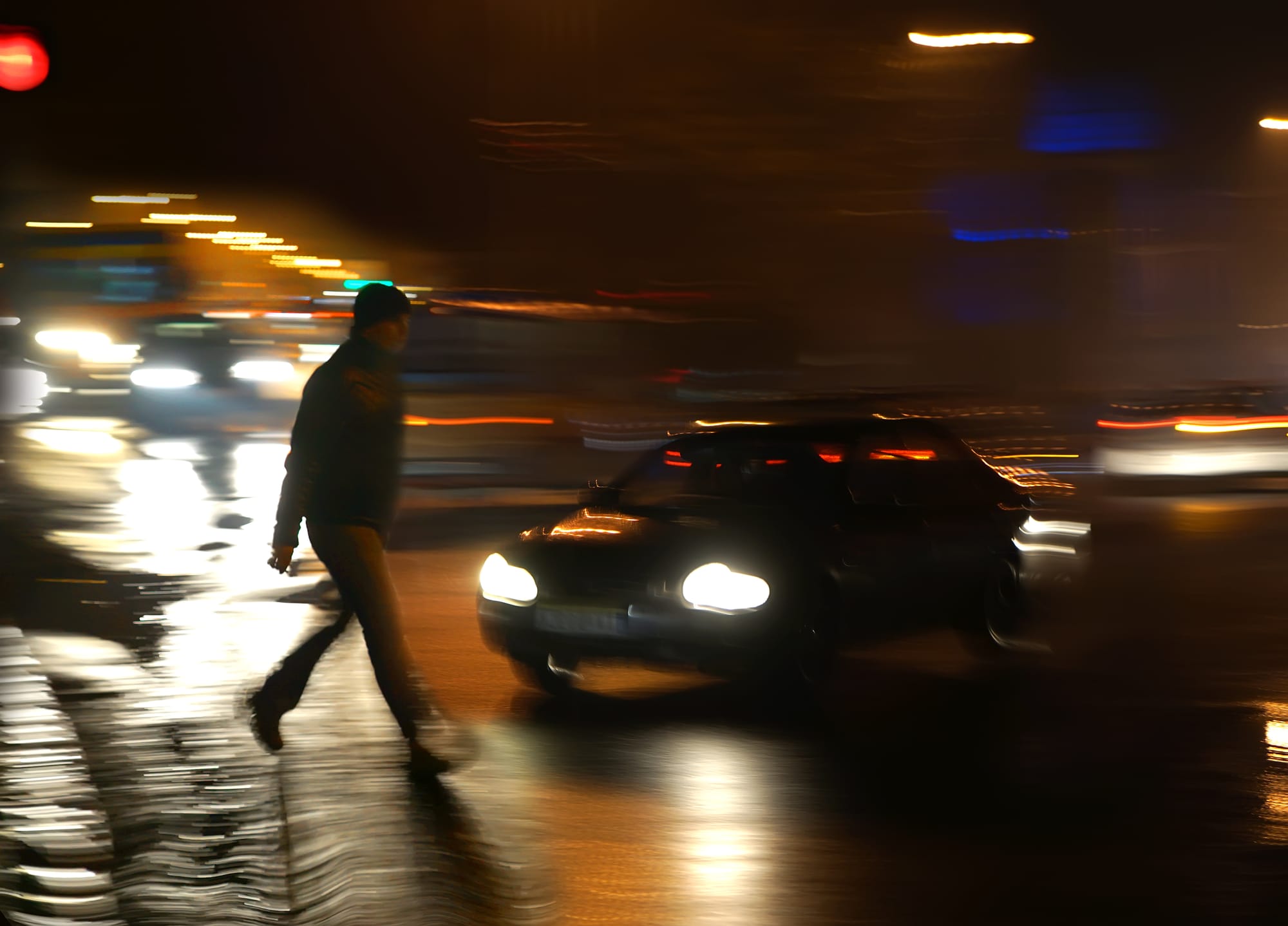
A pedestrian was struck and killed in San Jose in what police believe was both a DUI accident and a hit-and-run. It’s the kind of tragedy that is difficult to comprehend. One person loses his life, and the driver accused of causing the crash allegedly leaves rather than stopping to help.
According to the San Jose Police Department, a Chevrolet pickup truck struck an adult male pedestrian near Bernal Road and Via Del Oro shortly after 2 a.m. on August 2. The pedestrian, later identified as 47-year-old San Jose resident Jose Antonio Jimenez, died at the scene.
Police located the truck elsewhere in San Jose and contacted the driver, who they determined was allegedly under the influence of alcohol. The driver was arrested on suspicion of DUI, vehicular manslaughter, and felony hit-and-run. The investigation remains ongoing.
This was San Jose’s 26th traffic-related death and 12th pedestrian fatality of 2026. Behind each of those numbers is a person whose family is now left to deal with a sudden and preventable loss.
In my work representing injured pedestrians and families after fatal California traffic accidents, I’ve seen how confusing it can be when a criminal prosecution and a civil claim proceed at the same time.
Cases involving suspected drunk driving and hit-and-run conduct can lead to both criminal charges and a separate California pedestrian accident claim. Although those proceedings may grow out of the same collision, they have different purposes and can produce very different outcomes.
What Happens After a Fatal Pedestrian DUI Hit-and-Run?
The criminal case is brought by the government, not by the victim’s family. Prosecutors will decide which charges to pursue based on the evidence gathered by police, including chemical test results, witness statements, surveillance footage, vehicle damage, and the driver’s actions before and after the crash.
California law requires a driver involved in an accident that causes injury or death to stop, provide identifying information, and offer reasonable assistance. Leaving the scene can lead to a felony charge under California Vehicle Code Section 20001.
A criminal conviction may result in incarceration, fines, probation, license consequences, and restitution. But the criminal process is primarily concerned with whether the accused violated California law and what punishment should follow. It isn’t designed to fully compensate a family for everything that has been taken from them.
How Is a California Wrongful Death Claim Different From the Criminal Case?
A California wrongful death lawsuit is a civil case brought by certain surviving family members. Its purpose is to hold the responsible party financially accountable for the losses caused by the death.
Depending on the family’s circumstances, recoverable damages may include funeral and burial expenses, lost financial support, and the loss of the decedent’s love, companionship, guidance, and care. California law identifies which family members may bring such a claim, often including a surviving spouse, domestic partner, children, or other qualifying heirs.
A related survival action may sometimes be available for losses the deceased person could have pursued had they survived. Whether that type of claim applies depends on the facts, including whether the person remained conscious or survived for any period after being injured.
The outcome of the criminal prosecution doesn’t automatically decide the civil case. The two proceedings use different standards of proof. A civil claim may therefore remain viable even if criminal charges are reduced, dismissed, or don’t result in a conviction.
Can Fleeing the Scene Affect a Civil Claim?
Leaving the scene does not, by itself, prove what caused the initial crash. That question still requires a careful hit-and-run accident investigation into the driver’s conduct, the pedestrian’s location, lighting, visibility, speed, roadway conditions, and other available evidence.
However, alleged hit-and-run conduct can become important evidence. It may help establish the driver's identity, explain why evidence was delayed or lost, and provide context for what happened immediately after impact. Evidence that the driver was intoxicated may also support a claim that the conduct involved more than ordinary negligence.
In some particularly serious cases, a family may seek punitive damages. These damages are intended to punish especially wrongful conduct rather than compensate the family for a specific loss. They are not available after every DUI or hit-and-run case, and whether they can be pursued depends on the evidence concerning the driver’s knowledge, choices, and state of mind.
Why a Pedestrian Accident Attorney May Conduct a Separate Investigation
Families understandably expect the police investigation to uncover everything that happened. Law enforcement’s work is essential, but its focus is on determining whether a crime occurred. A California pedestrian accident lawyer conducting a civil investigation may ask additional questions about financial responsibility, available insurance, and whether another person or business contributed.
That investigation may include reviewing:
- Surveillance or doorbell video from nearby homes and businesses
- Traffic-camera or license plate reader records
- Witness statements and 911 calls
- Data stored by the vehicle
- Cellphone activity
- Receipts or records showing where the driver had been
- The driver’s insurance coverage and other potentially applicable policies
This evidence can disappear quickly. Video may be overwritten, witnesses may become harder to locate, and physical evidence may change once a vehicle is repaired or released. That is why families often benefit from consulting an attorney who can help preserve evidence without waiting for the criminal case to conclude.
What Compensation and Insurance Coverage May Be Available?
One of the hardest parts of these cases is discovering that the person accused of causing the death has no insurance or carries coverage that is nowhere near enough to compensate the family.
That doesn’t always mean there are no other options. Depending on the circumstances, an investigation may examine who owned the vehicle, whether the driver was working at the time, and whether uninsured or underinsured motorist coverage is available under a policy held by the pedestrian or someone in the pedestrian’s household.
California generally limits when a business or social host can be held liable merely for furnishing alcohol to an adult. Still, every case should be reviewed on its own facts rather than assuming the driver’s personal auto policy is the only possible source of recovery.
When Should a Family Speak With an Attorney?
A criminal prosecution can take months or longer, but a family doesn’t have to wait for that case to end before speaking with a civil attorney. Evidence may need to be preserved, insurance coverage identified, and filing deadlines evaluated while the criminal investigation is still underway.
Families are often left waiting for answers while also handling funeral expenses, financial uncertainty, and grief. They may receive calls from insurers or requests for information before they’ve had time to understand their rights.
No legal case can replace the person who was lost. What a civil claim can sometimes provide is accountability, financial stability, and a clearer understanding of how a preventable death occurred.
Contact a San Francisco Pedestrian Accident Attorney
If your family has lost someone in a California pedestrian accident involving a suspected impaired or hit-and-run driver, you may have questions about how the criminal investigation affects your civil rights and what insurance or compensation may be available.
Claude Wyle and the attorneys at Choulos, Choulos & Wyle represent pedestrians and families affected by serious and fatal traffic accidents throughout San Francisco, San Jose, the Bay Area, and California. You can contact the firm online, email cwyle@ccwlawyers.com, or call (415) 432-7290 for a free consultation.
This article is for general informational purposes and does not constitute legal advice. Criminal allegations are not proof of guilt, and every civil claim depends on its own facts. You should consult a licensed attorney regarding your specific situation.