

Many law firms never get a clear picture of how their website is performing. Some see no numbers. Some get too many. Some get reports that look impressive but don’t answer anything useful.
If that sounds familiar, you’re not alone. And you don’t need to learn analytics to fix it. Before 2026 hits, there are three numbers worth getting in front of. They’re simple, they’re trackable, and they’ll tell you more about your website’s performance than most 30-page reports ever did.
1) Your Monthly Conversion Count
For most firms, the highest-value conversions are simple: form submissions, phone clicks, and completed chats.
In Google Analytics (GA4), these are typically tracked as events that you mark as important actions (Google now calls them key events in many places, but most people still say “conversions”).
You should be able to see how many of each happened per month, and whether that number is trending up or down. If you also track secondary actions like newsletter signups, guide downloads, or event registrations, even better. Those are real signals of intent and they are absolutely trackable.
2) Your Organic Search Trend
Organic search in GA4 represents visitors who arrive from non-ad search results. That includes traditional links and the newer AI-driven citations inside Google's AI Overviews and AI Mode.
If you're evaluating SEO or content performance, organic search is the cleanest signal. It reflects visitors who found you because of something you published, not something you paid for.
You don't need a complex report. You just need a trend line: is organic search flat, climbing, or dropping over the last six months?
Then pair it with conversions. Organic traffic without conversions is just foot traffic.
One thing to watch heading into 2026: many firms will see (and are already seeing) some discovery shift from traditional search to AI assistants like ChatGPT and Claude. If/when that happens, those visits show up in referral traffic, not organic search. If your organic trend flattens or dips, check referrals to see whether AI-driven visits are picking up the slack.
3) Your Top Organic Entry Pages
This is the underrated one.
Search keyword data is limited and increasingly privacy-filtered, so you often cannot cleanly connect “this exact query” to “this exact person.” Even Search Console withholds some query data to protect privacy.
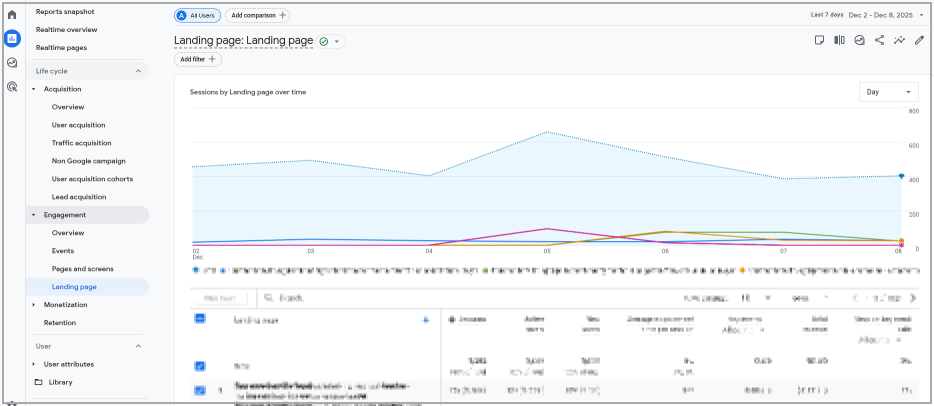
The workaround is not complicated. Look at landing pages, meaning the first page someone sees when they enter the site. Google Analytics even has a dedicated Landing page report.
When you segment organic entry pages, patterns show up fast:
- Practice area pages usually mean non-branded intent (problem-first searches).
- Firm pages often signal branded demand (they already know you).
- Attorney bio pages often signal reputation and referrals (online or offline).
The point
If you're already tracking these three, you're ahead of most firms.
If you're not, ask your agency to set them up before January. And if they aren’t equipped for deeper analytics work, or you simply prefer reporting from someone who isn’t grading their own homework, that’s something we help with.
Going into 2026, the firms that win won't be the ones who feel like marketing is working. They'll be the ones who can prove it.
For a limited time, you can sign up for a Contributor account for under $2,400 for a full year – that’s 40% off the regular price. Grow your brand, become a trusted voice in the legal community, and reach potential new clients. You’ll also unlock discounted writing packages and a referral reward when you sign up before the sale ends.


